
About Measure U


Measure U: At A Glance
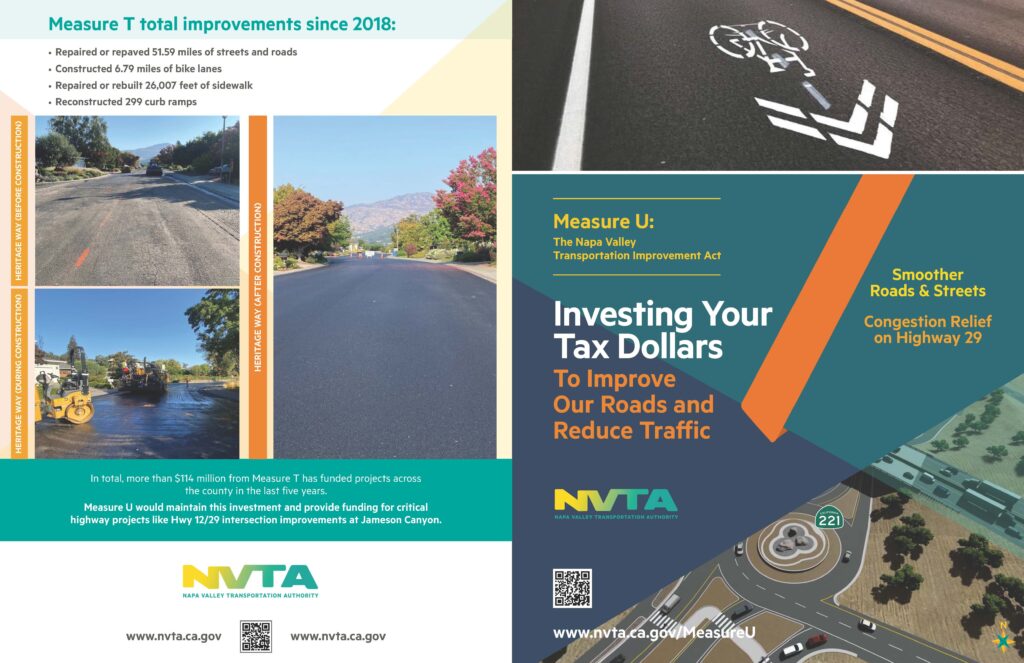
- Measure U will replace Measure T, a ½ cent sales tax for local streets and roads, without raising taxes
- Measure U continues funding for local streets and roads maintenance and provides flexibility to jurisdictions to make community transportation improvements
- Provides funding to improve traffic conditions on Napa’s highways
- Expands the bike and pedestrian provision to include Class IV bike lanes (current Measure only allows for funding of Class I projects)
- Provides flexibility to bond and bring funding forward to deliver more local streets and road improvements faster
Persistent Challenges with Measure T
Pay-go funding is not enough to keep up with deferred maintenance that is causing pavement conditions to continue to decline
- Pay-go system does not provide the flexibility needed to build costlier projects faster
- Growth in sales tax revenue (4.6% annually) being outpaced by rising construction costs (up 10.7% annually). Over time, this will cut the purchasing power of Measure T
- Narrower focus of current measure does not provide jurisdictions with any flexibility to use local streets and roads money for other transportation priorities

Details and Benefits
Bonding – Regional Capital Improvement Projects
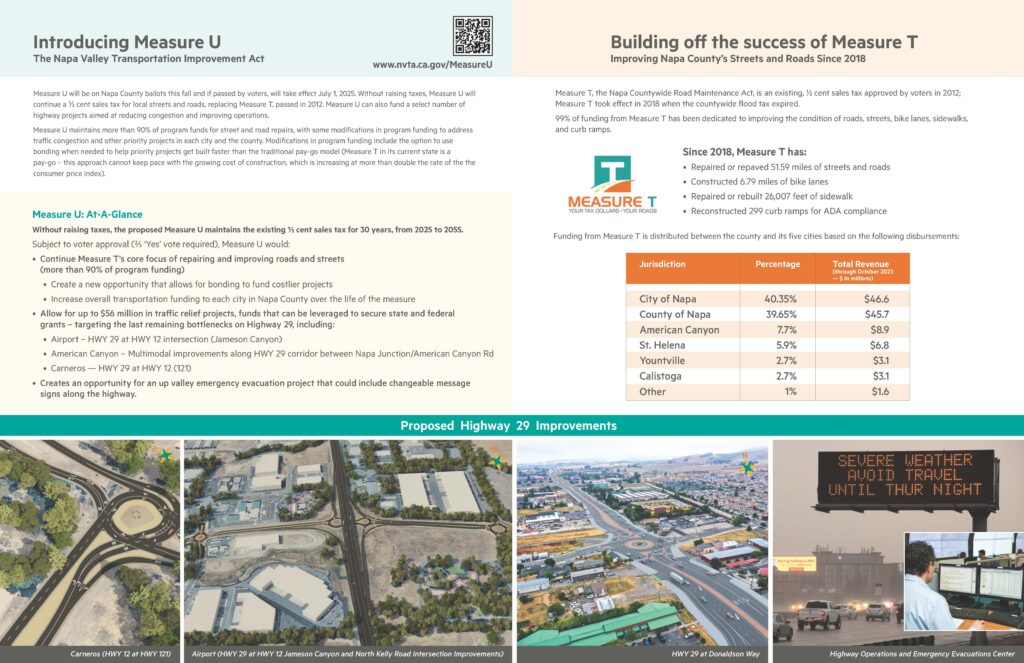
Measure U will set aside up to $56 million for regional capital improvement projects through the issuance of bonds for the opportunity to achieve long-held transportation priorities: breaking the last remaining bottlenecks on Highway 29 between Napa and American Canyon. This apportionment will position Napa County to be more competitive in securing state and federal grant funding opportunities to bring these projects to fruition.
Bonding for regional capital improvement projects can help fund: Highway 29 Improvement Projects:
- Airport — SR 29/SR 12 intersection – Intersection Improvements at Highway 29 and Jameson Canyon/Airport Road and Highway 12/Kelly Road
- Highway 29-American Canyon – Operational and Multimodal Improvements on Highway 29 between Napa Junction and American Canyon Road
- Carneros — SR 29/SR 12 – Intersection Improvements at Highway 29/Carneros Highway
- Highway Operations and Emergency Evacuations – To allow proactive management of highway facilities and emergency demands such as natural disasters. It includes adaptive messaging signs and battery storage for Vine Transit, or other transportation projects related to emergency evacuation routes.
Regional projects provide benefit to the entire county because workers, residents, and visitors to and from all communities use them.

Bonding – Local Streets and Roads Funding
Currently, Measure T’s pay-go system provides annual allocations to jurisdictions for local streets and road improvement and rehabilitation projects. Under Measure U, jurisdictions will receive more funding over the life of the measure and have the option to issue bonds to build costlier road rehabilitation and improvement projects faster. At right is a chart summarizing changes in this funding:
* The chart below summarizes differences between Measure T and the proposed Measure U (figures in $1,000s)

Flexibility to Meet Current and Future Needs
Bonding – Funding Road Repair and Improvement Projects Faster
Measure U will create the flexibility jurisdictions need to get costlier road repair projects funded faster, instead of having to save pay-go allocations over the course of many years to fund priority projects.
Funding Transportation Projects Not Under LS&R Guidelines
In response to jurisdictional concerns, the replacement measure will provide flexibility to allocate up to 5% of local streets and roads allocations for projects outside the scope of maintenance and rehabilitation. For example, this could include the Newell Drive extension in American Canyon, Silverado five-way intersection in the City of Napa, or bridge replacement in St. Helena.
Funding to Support Class IV Bike Lanes
While NVTA supports the continued creation of Class I bike lanes like the Napa Valley Vine Trail, in response to jurisdictional input, the replacement measure will also provide funding to create Class IV buffered bike lanes in places where Class I bike lanes are not feasible.
 Measure U Fact Sheet